


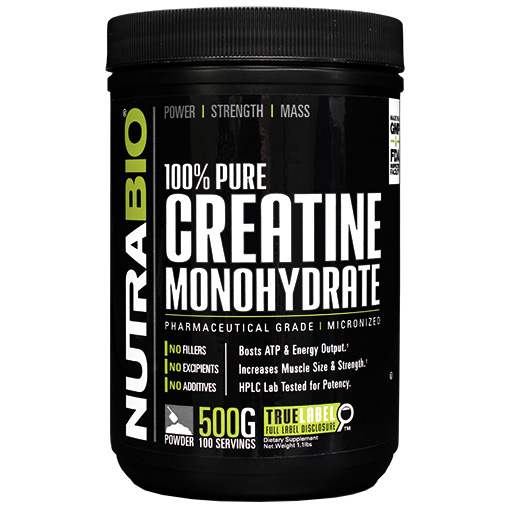
ATP and Creatine Phosphate. Creatine is one of the most talked-about ergogenic aids around. A number of supplement companies sell creatine monohydrate(CrH2O) as a tool for increasing strength and muscle mass.
The Role of ATP
ATP and Creatine Phosphate – what about ATP? A series of chemical reactions generates the energy produced by the body. The raw materials for these reactions are the foods we eat. I’m talking about carbohydrates, fats, and proteins. These foods digest in the stomach and assimilate into the intestines. Many go through additional chemical changes in the liver. These components convert into ATP (adenosine triphosphate) by a series of reactions.
ATP – Your Muscles Energy System
ATP is the body’s “energy currency”. It’s used for building new tissue and, of course, muscle contraction. As its name implies, ATP has three phosphate molecules bonded to an adenosine molecule. Bonds connecting these phosphate molecules are broken through a process known as hydrolysis.
When this happens, a great deal of energy is created. This breaking of bonds between molecules produces all of the energy utilized by the body. In muscle the energy activates specific sites on the contractile elements of the muscle fiber. This causes them to shorten.
ATP and Creatine Phosphate – An Energy Pathway
There are three main pathways for the energy production the body needs to live and grow. This energy is produced by complex reactions that occur within the cell. These reactions involve the use of ATP in different ways. Two of these three pathways are anaerobic. This means that the chemical processes producing the energy do not utilize oxygen. The anaerobic pathways include the ATP-CP system and glycolysis. The third pathway utilizes oxygen in its chemical reactions and is referred to as the aerobic system. Only the ATP-CP system uses creatine to create energy.
The ATP and Creatine Phosphate Energy Pathway
The ATP-CP pathway is the body’s only immediate source of energy. Activities such as weightlifting and the 100-yard dash are heavily dependent on this pathway. That’s because they require rapid and immediate energy. The ATP-CP system involves an interaction between two molecules, ATP and creatine phosphate (CP) This happens within the cell.
When ATP’s outermost phosphate bond is broken off, adenosine diphosphate, or ADP, is formed. This causes a great deal of energy. Since the body has only about three ounces of ATP at a time, it runs out of its supply rapidly. Creatine phosphate comes to the rescue. The CP molecule releases a lot of energy when the bond between creatine and phosphate molecules splits. As a result, its phosphate is donated directly to ADP to reform ATP. It does this in the presence of the catalytic enzyme creatine kinase. This is rephosphorylation.
ATP is now available to begin the energy cycle again. The cell’s concentration of CP is three to five times higher than that of ATP. Creatine phosphate functions as the cell’s energy reservoir.
The Energy Supplied By ATP and Creatine Phosphate
The ATP-CP pathway provides enough energy for a one-minute walk or six seconds of sprinting. After that, other pathways take over. The main advantage of this energy system is that it can go to work immediately. That’s something the others can’t do. If it weren’t for the ATP-CP system, we wouldn’t be able to lift heavy weights. We also won’t be able to do any other work that requires immediate full effort. We’d have to start lifting in slow motion.
The Other Energy Pathways
Besides ATP and creatine phosphate, there’s other energy systems. The second anaerobic system is glycolysis. This system provides most of the energy for medium-duration activities like bodybuilding. During glycolysis, a glucose molecule enters the cell from the blood. It then transforms into pyruvic acid. That happens through a series of complex reactions. These reactions allow a significant amount of energy to be produced quickly for muscular contraction. This happens just as the ATP and Creatine Phosphate system begins to phase out. Glycolysis can also use muscle glycogen (the stored form of glucose). Also, fat molecules break down and produce energy. This produces glycerol.
Pyruvic Acid & Lactic Acid
Pyruvic acid converts into lactic acid and alanine in the absence of oxygen. This helps keep glycolysis going. It does this by removing excess hydrogen ions that would normally bring it to a halt. The lactic acid escapes into the bloodstream and away from the muscle. This escape mechanism is only temporary. This is because the level of lactic acid in the blood and muscle eventually increases. This increased acidity inactivates some of the enzymes used in glycolysis. This reduces the ability of the muscles to contract. Fatigue sets in and exercise must stop.
Beyond ATP and Creatine Phosphate – What’s The Third Energy System?
The third type of energy production is the aerobic system. Vigorous exercise lasting two to three minutes uses this system. This system releases 95 percent of the potential energy in each glucose and fat molecule. It does this through a complex set of processes called the Krebs cycle. It can only function in the presence of oxygen. This aerobic system makes use of the mitochondria in the cells. These are the cells’ energy factories.
These energy systems interrelate with each other. They don’t switch on and off like the lights of a traffic signal. They overlap to provide a smooth transition from one means of energy production to another. This allows the body to perform at its best through all levels of exercise intensity. In the ATP and Creatine Phosphate system, creatine compounds play an important role in the process. They provide large amounts of energy for immediate use.